Close Menu
  • Home
  • Finance News
  • Personal Finance
  • Investing
  • Cards
    • Credit Cards
    • Debit
  • Insurance
  • Loans
  • Mortgage
  • More
    • Save Money
    • Banking
    • Taxes
    • Crime
What's Hot

EarnIn launches Early Pay for paychecks | PaymentsSource

March 21, 2025

How to Retire Like an Adult: An 11-Point Checklist for Responsible Freedom

March 21, 2025

How Trump’s Chaos Is Exacerbating The Financial Woes Of Colleges

March 21, 2025
Facebook X (Twitter) Instagram
InCapital Direct
Subscribe
  • Home
  • Finance News
  • Personal Finance
  • Investing
  • Cards
    • Credit Cards
    • Debit
  • Insurance
  • Loans
  • Mortgage
  • More
    • Save Money
    • Banking
    • Taxes
    • Crime
InCapital Direct
Home»Finance News»‘Rosy’ Congressional Budget Assumptions Might Increase National Debt
Finance News

‘Rosy’ Congressional Budget Assumptions Might Increase National Debt

February 8, 2025No Comments4 Mins Read
Facebook Twitter LinkedIn Telegram Pinterest Tumblr Reddit WhatsApp Email
‘Rosy’ Congressional Budget Assumptions Might Increase National Debt
Share
Facebook Twitter LinkedIn Pinterest Email

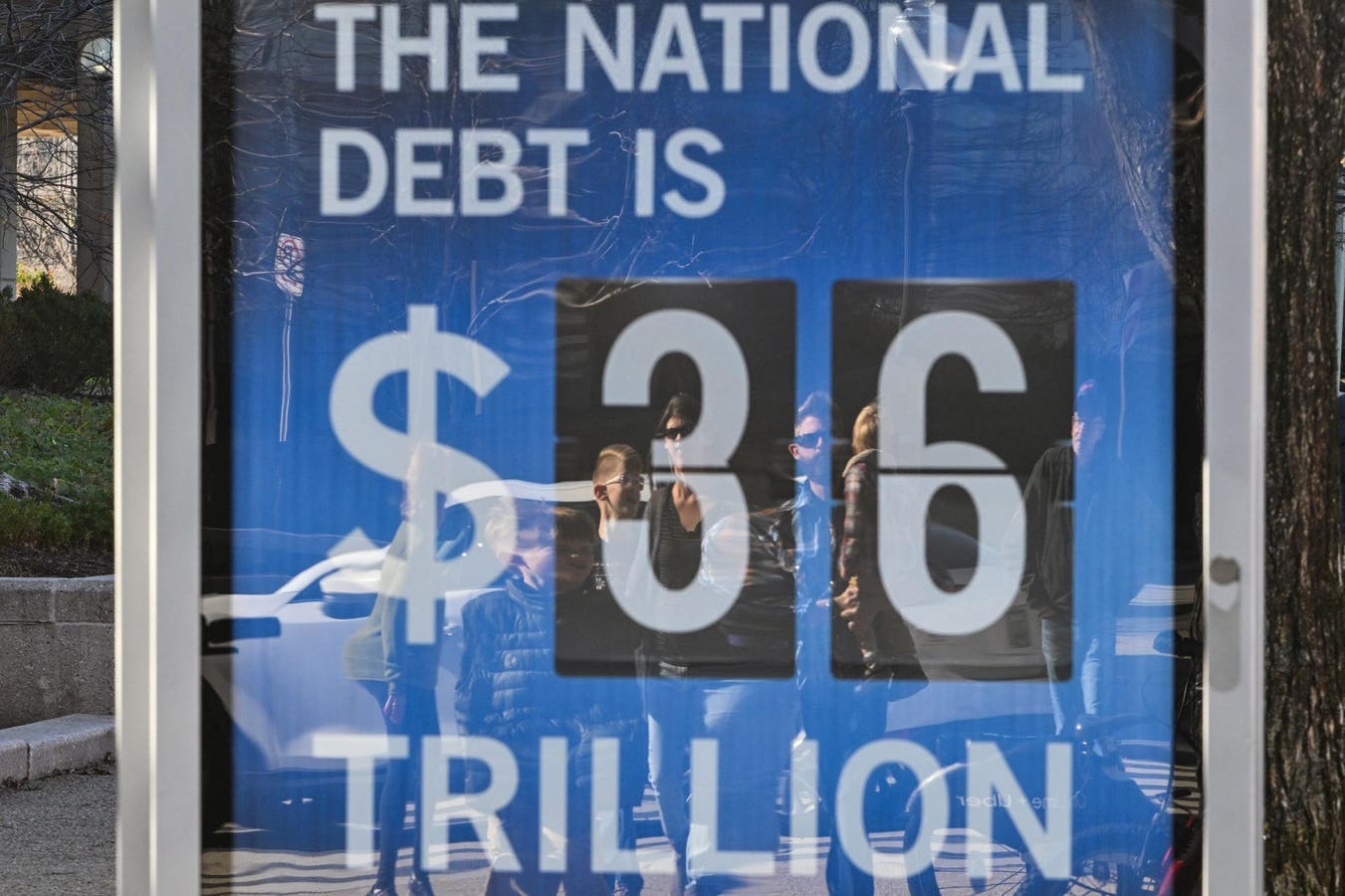
A National Debt Clock billboard display shows the United States gross national debt and each … [+] American family’s share of the debt in Washington, DC, on December 30, 2024. The Congressional Budget Office has stated that the U.S. national debt is poised to top $56 trillion by 2034, as rising spending and interest expenses outpace tax revenues. The mounting costs of Social Security and Medicare continue to weigh on the nation’s finances, along with rising interest rates, which have made it more costly for the federal government to borrow huge sums of money. (Photo by ROBERTO SCHMIDT / AFP) (Photo by ROBERTO SCHMIDT/AFP via Getty Images)

AFP via Getty Images

The current congressional budget process reportedly is reaching back to a 2017 playbook to provide cover for irresponsible spending. It involves pretending that a desired course of action will magically result in high economic growth. A view to history shows this is most unlikely to happen.

The Peter G. Peterson Foundation (PGPF), an economically conservative organization focused on long-term government fiscal stability, pointed out the most current example. To pass the economic agenda of the Donald Trump administration, Republicans in the Senate plan to use the budget reconciliation process.

Reconciliation is a narrow type of action that is only allowed to deal with spending, revenue, or the federal debt limit. The Senate gets one chance at a reconciliation bill for each of these in any given year. The so-called Byrd Rule prohibits an increase of federal debt over a 10-year period or from a change to Social Security. Critically, the reconciliation process only needs a simple majority to pass the bill. No filibuster is allowed, so the majority party can usually have its way.

The theoretical 10-year period without an increase in federal debt is difficult to meet, especially when the intent is to increase net expenditures. Without significant defections on a vote, the party in power will have its way. However, it still must show the bill will not increase the debt. Assumptions can make or break the argument.

In 2017, the Trump administration in its budget used unrealistic economic projections. Although this wasn’t the case of a reconciliation bill, the mechanism was similar. From 2017 to 2027 — another 10-year period — year-over-year gross domestic product (GDP) was supposed to range from 4.1% to 9.2%, except for 2024, when it was supposed to drop to 1.1%.

The GDP % change shows how the Trump White House in 2017 projected highly unrealistic growth.

Trump White House First Term

It was part of their argument that major tax cuts would pay for themselves. They didn’t and the result was trillions of dollars of additional debt.

The Senate GOP sentiments are not so high, but they are high enough. This graph from the U.S. Bureau of Economic Analysis shows GDP growth over a long period.

Real GDP year-over-year percentage growth.

U.S. Bureau of Economic Analysis

Except for 2023, which showed high growth given the depressed economic baseline of the pandemic, the last time the U.S. saw GDP growth over 3% was in 2005 in the overheated runup to the Great Recession. There were periods of higher growth before but under significantly different conditions.

As PGPF noted, 3% GDP growth has happened only four times in the last 25 years and higher growth typically happened after recessions, not during stable economic times, so this seems historically unlikely.

Also, the organization wrote, “No current nonpartisan forecast assumes anything close to 3 percent growth over the next decade.” That includes projections from the Federal Reserve, the Congressional Budget Office, and “the consensus of the country’s top economic forecasters.” Most think the average over the next decade will be under 2%. The most bullish expect 2.2% growth on average.

The “overly rosy” projections, as the organization called them, would help clear the path for extended tax cuts by artificially reducing projected deficits by $2 trillion through 2034, PGPF wrote. This is bad for consumers, particularly the economically disadvantaged of the country, which, depending on how you count, is a majority.

Source link

See also  WMT, LOW, INTU, KHC and more
Assumptions Budget Congressional Debt Increase National Rosy
Share. Facebook Twitter Pinterest LinkedIn Tumblr Telegram Email
Previous ArticleLawsuits over security concerns with DOGE are piling up
Next Article What are Treasury bills?

Related Posts

How Trump’s Chaos Is Exacerbating The Financial Woes Of Colleges

March 21, 2025

Student loans will be handled by Small Business Administration: Trump

March 21, 2025

Understanding Hidden Debt and How to Fight Back 

March 21, 2025
Add A Comment
Leave A Reply Cancel Reply

Top Posts

Different Types of Consumer Debt

October 25, 2024

Graduate by Hilton: The Guide to These Boutique Hotels in College Towns

March 16, 2025

Bill Hwang of Archegos has been sentenced to 18 years in prison

November 21, 2024
Ads Banner

Subscribe to Updates

Subscribe to Get the Latest Financial Tips and Insights Delivered to Your Inbox!

Stay informed with our finance blog! Get expert insights, money management tips, investment strategies, and the latest financial news to help you make smart financial decisions.

We're social. Connect with us:

Facebook X (Twitter) Instagram YouTube
Top Insights

EarnIn launches Early Pay for paychecks | PaymentsSource

March 21, 2025

How to Retire Like an Adult: An 11-Point Checklist for Responsible Freedom

March 21, 2025

How Trump’s Chaos Is Exacerbating The Financial Woes Of Colleges

March 21, 2025
Get Informed

Subscribe to Updates

Subscribe to Get the Latest Financial Tips and Insights Delivered to Your Inbox!

© 2025 incapitaldirect.com - All rights reserved.
  • Contact
  • Privacy Policy
  • Terms & Conditions

Type above and press Enter to search. Press Esc to cancel.